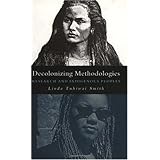
Average Reviews:

(More customer reviews)Are you looking to buy Decolonizing Methodologies: Research and Indigenous Peoples? Here is the right place to find the great deals. we can offer discounts of up to 90% on Decolonizing Methodologies: Research and Indigenous Peoples. Check out the link below:
>> Click Here to See Compare Prices and Get the Best Offers
Decolonizing Methodologies: Research and Indigenous Peoples ReviewLooking at Western research practices from the 'underside' of a positivist paradigm deeply entrenched and diffused throughout public and private educational, governmental, and corporate tentacles, Linda Tuhiwai Smith is a Maori (New Zealand) intellectual presenting a counter-methodological narrative stemming from a collective indigenous historical cynicism and whose voice bespeaks the refusal to be objectified by an inherently racist and imperialist mode of constructing knowledge and re-presentations of non-Western peoples. Deconstructing Western research paradigms is simply an act of defiance and resistance for Smith, particularly since she constructs a radical alternative methodology rooted in self-determination, social justice, intellectual property rights, and active participation in all knowledge-making, contributions to the research processes, and dissemination of 'findings'. The exigency of articulating a research methodology aimed at critical praxis for Western and non-Western peoples interested in indigenous issues emerges at a point where globalization and neo-liberal imperial practices and investments are opening new spaces for the unilateral and/or predominant benefit of Western research regimes that continue capitalizing and objectifying indigenous peoples through racist and incorrigible projects that erase human dignity, i.e. Human Genome Diversity Project.The book can strategically be divided into two main sections: the first section explores the contemporary and historical legacy of an imperial tryst between Western scientific, economic, and ideological formations shaping relations with alterity (Chapters 1-5); the second section outlines a radical alternative methodology for conducting research on indigenous peoples and issues (Chapters 6-9). The first chapter reveals the 'Enlightenment' and positivist threads that weave imperialism, history, writing, and theoretical practices that continue to shape current research and socio-political policies on an international level. Smith states: 'research within late-modern and late-colonial conditions continues relentlessly and brings with it a new wave of exploration, discovery, exploitation, and appropriation' (24). Deconstructing the historical legacy of imperial practices is also a call for rewriting and rerighting history with indigenous perspectives. The second chapter outlines the Baconian processes by which Westerners come to view the world as a standing reserve of objects for empirical inquiry, discursive appropriation, and mimetic comportment processes aimed at subjugating and 'controlling' nature and indigenous peoples with an intellectual will to power stemming from racist ideologues who trace some form of theoretical lineage back to Bacon, Kant, Hegel, Hume and others. Borrowing from Stuart Hall, this process moves from classification of the world and others, to collapsing images for a convenient system of representation, to presenting a reified model for comparative analysis, and, finally, establishing criteria for hierarchical positionality. Chapter three delves further into deconstructing research, as viewed through imperial eyes, and how this methodology produced a self-perpetuating apparatus comprised of multifarious disciplines for the construction and future survival of colonial 'knowledge' and all those who invest in these truth regimes that purport to be 'universal', 'neutral', objectively sound, and constructed on a foundation of 'absolute certainty'.
Chapter four and five highlight many instances of how imperial research regimes continue to invest in the discursive and 'scientific' construction, re-presentation, and exploitation of indigenous peoples for profit and social control. The globe has become one large information colony where research is the means to inscribe social and ideological control and Westernized fabrications of history on the backs of indigenous peoples around the world. The most infamous example of how the imperial research regime continues to exist is through scientific projects stemming from private corporate entities mainly subsidized by governments. The Human Genome Diversity Project attempts to subjugate indigenous peoples by mapping and reifying DNA and possessing it as 'intellectual property' for future use. The attempt to patent the genetic make-up of the Hagahai people (New Guinea) by the U.S. government is indisputable proof of how these scientific projects threaten the future, autonomy, and human rights of indigenous peoples.
The second part of the book focuses on constructing an indigenous alternative to decolonize indigenous peoples from Western regimes of research based on emergent tribal social issues, practices, and beliefs. The center of this decolonizing project is constructed through Polynesian metaphors of 'space-time'. The center of social activity and identity is an archipelago comprised of self-determination in terms of tribal autonomy on a social, economic, and research level, as well as the full participation in inter-tribal and inter-national relations. Healing, decolonization, transformation, and mobilization are the four main 'directions' that frame the spaces of this project. Survival, recovery, and development are the main 'tides' that connect and transform all directionality of the project. This methodology is intended to transform indigenous peoples from passive objects in Western research to active-participants in an indigenous process of reconfiguring themselves and the world around them. Respect becomes the main affective principle for the survival of indigenous peoples and the project: 'through respect, the place of everyone, and everything in the universe is kept in balance and harmony'the denial by the West of humanity to indigenous peoples, the denial of citizenship and human rights, the denial of the right to self-determination'all these demonstrate palpably the enormous lack of respect which has marked the relations of indigenous and non-indigenous peoples' (120). Without respect, there is no dignity.
Chapter seven outlines a means of articulating such a project to indigenous and non-indigenous peoples and the challenges associated with it. Chapter eight provides a list of current indigenous research projects. Chapter nine provides a case study of the Maori peoples in which the method outlined in chapter six was put into practice. Chapter ten details with the methodological transformation of passive objects to active agents and lists tactics for strengthening and sustaining critical research for decolonizing processes.
Generally, when the researched become researchers, self-determination and healing can take place, communities can create and control research processes and the subsequent naming of the world, and they can define their relationship with others and the environment.
If a critical theroetical/methodological 'flaw' or problematic of this decolonial methodology exists, it might come to presence from a post-structural disdain for outlining a process by which people can 'liberate' themselves from Western imperialist research regimes. But then again, post-structural thought is mainly a Western construction and/or response to
'modernity' and its discontents.Decolonizing Methodologies: Research and Indigenous Peoples Overview
Want to learn more information about Decolonizing Methodologies: Research and Indigenous Peoples?
>> Click Here to See All Customer Reviews & Ratings Now

0 comments:
Post a Comment